
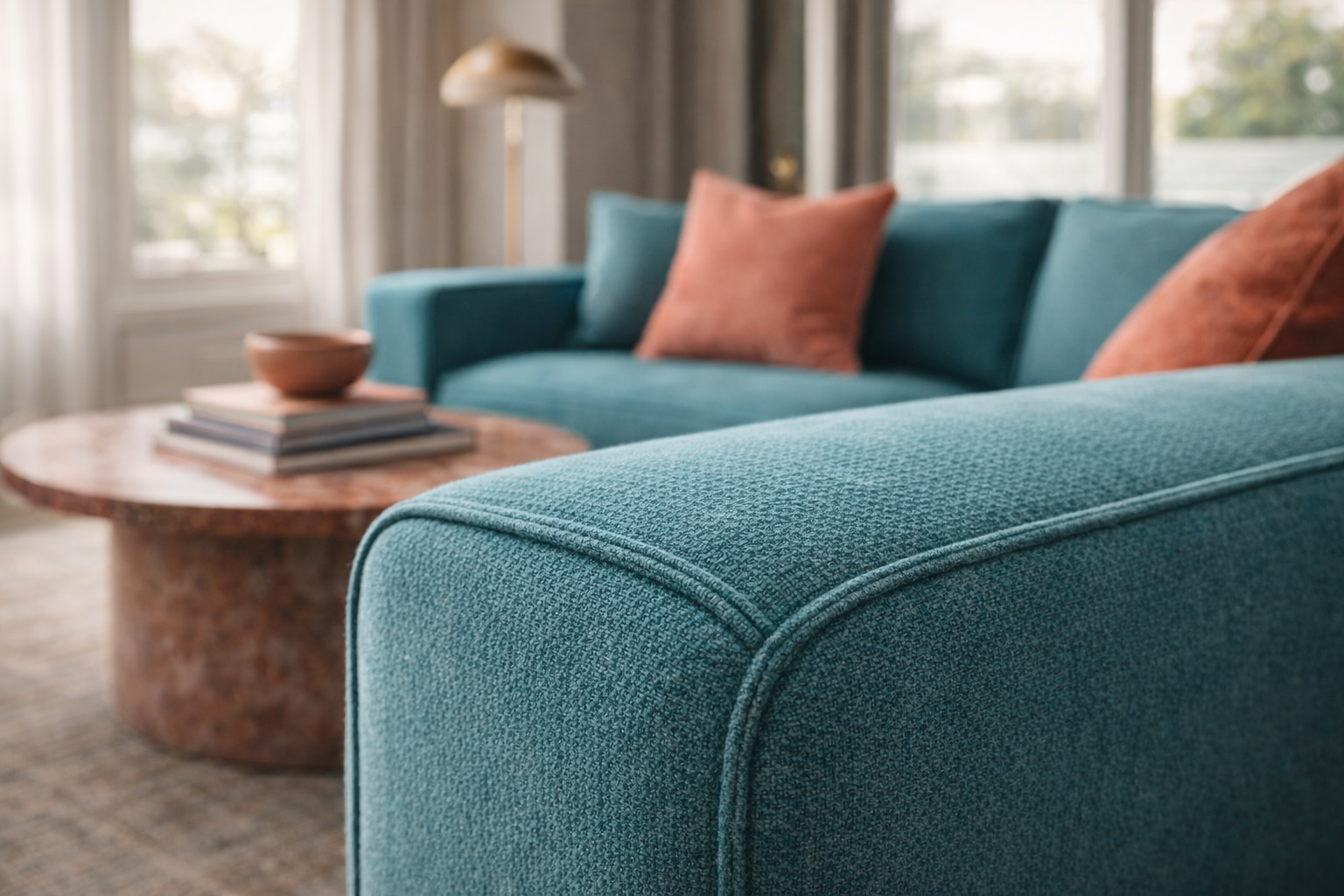
16 Mar Designing for Durability: How Well-Chosen Upholstery Ages Over
Designing for Durability: How Well-Chosen Upholstery Ages Over Time
Durability in upholstery is rarely the result of a single decision. It is the outcome of multiple choices made early in a project, often long before an interior is completed or put into use. Material selection, construction methods and expected use all influence how upholstery performs and evolves over time.
In yachts, residential interiors and hospitality spaces, durable upholstery design is not only about resistance. It is about how materials behave under real conditions, how they maintain comfort and how they age without compromising function or appearance.
Durability Is Part of the Design Process
Upholstery that ages well is designed with longevity in mind. This means understanding exposure to light, movement and wear patterns from the outset. In practice, many durability issues appear not because materials are poor, but because they are asked to perform outside the conditions they were selected for.
Fabrics and finishes chosen with a clear understanding of their application tend to perform consistently over time, even in demanding environments. Seating areas, circulation zones and soft finishes all respond differently to use, and durability depends on aligning material performance with these realities rather than applying a uniform solution throughout an interior.
How Well-Chosen Upholstery Ages with Use
Over time, high-quality upholstery does not simply resist wear. It adapts to it. Materials soften where comfort is essential, retain structure where support matters and develop a patina that reflects use without appearing deteriorated.
When durability has not been properly considered at the design stage, signs of fatigue often appear early. Stretching, loss of shape or uneven wear are common indicators of a mismatch between material choice and real conditions of use. These issues are rarely isolated and often require corrective interventions that could have been avoided through better initial decisions.
In yachts and other high-use interiors, where access and replacement are complex, upholstery designed for longevity reduces the need for repeated adjustments and unplanned maintenance.
Long-Term Value Beyond Appearance
Designing for durability goes beyond aesthetics. Upholstery that performs well over time supports comfort, simplifies maintenance and preserves the integrity of the interior as a whole.
By focusing on durable upholstery design, material behaviour and construction quality, interiors are created to be lived in without constant correction. The result is a space that continues to function as intended, long after the initial installation has passed.