

23 Feb How Material Choices Impact Acoustics and Privacy in Yachts, Homes and Hotels
In high-end environments, comfort is not defined only by what is visible. Acoustic control and privacy play a crucial role in how a space is experienced, whether on board a yacht, in a private residence or within a hotel. Poor sound management can compromise rest, concentration and overall quality, regardless of how refined the design may be.
At Revival, material selection is approached from both a design and a technical perspective. Every fabric, foam and upholstered surface is chosen not only for its appearance, but also for how it performs acoustically and how it contributes to privacy in real-use conditions.
Why acoustics matter across different environments
In yachts, sound travels easily through compact interiors, hard surfaces and structural elements. Engine noise, vibration, crew movement and exterior conditions can all impact onboard comfort if materials are not carefully selected.
In private homes, acoustic comfort is essential for daily living. Open-plan layouts, large glazed surfaces and modern architectural materials often require specific solutions to manage sound reflection and transmission between rooms.
In hotels, privacy is a critical factor in guest satisfaction. Noise transfer between rooms, corridors and common areas directly affects the perceived quality of the space and the overall experience.
Across all three sectors, effective acoustic control depends largely on the materials used and how they are integrated into the design.
How materials influence sound absorption and privacy
Soft, layered and porous materials play a key role in reducing sound reflection and absorbing airborne noise. Upholstered elements such as wall panels, headboards, seating and ceiling features help limit reverberation and improve speech clarity.
Textiles with dense weaves, combined with acoustic foams or backing layers, can significantly reduce sound transmission between spaces. In seating and fixed upholstery, foam density and structure influence how vibrations are absorbed and how noise is dampened.
Carpets and rugs also contribute to acoustic comfort by reducing impact noise and echo, particularly in high-traffic areas such as salons, corridors, staircases or hotel lobbies.
The effectiveness of these solutions does not depend on a single material, but on how different layers work together as a system.
Balancing acoustic performance with design and durability
Achieving good acoustic performance should never compromise aesthetics or longevity. In demanding environments like yachts and hotels, materials must also meet strict requirements for durability, fire resistance and ease of maintenance.
At Revival, acoustic considerations are integrated into the material selection process from the start. We work with technical textiles, marine-grade foams and certified materials that deliver sound absorption while maintaining structural stability and long-term performance.
This approach allows acoustic solutions to remain discreet and fully integrated into the design, without visible compromises or added bulk.
Tailored solutions for each space
No two projects share the same acoustic challenges. Cabin layouts, ceiling heights, surface finishes and usage patterns all influence how sound behaves in a space.
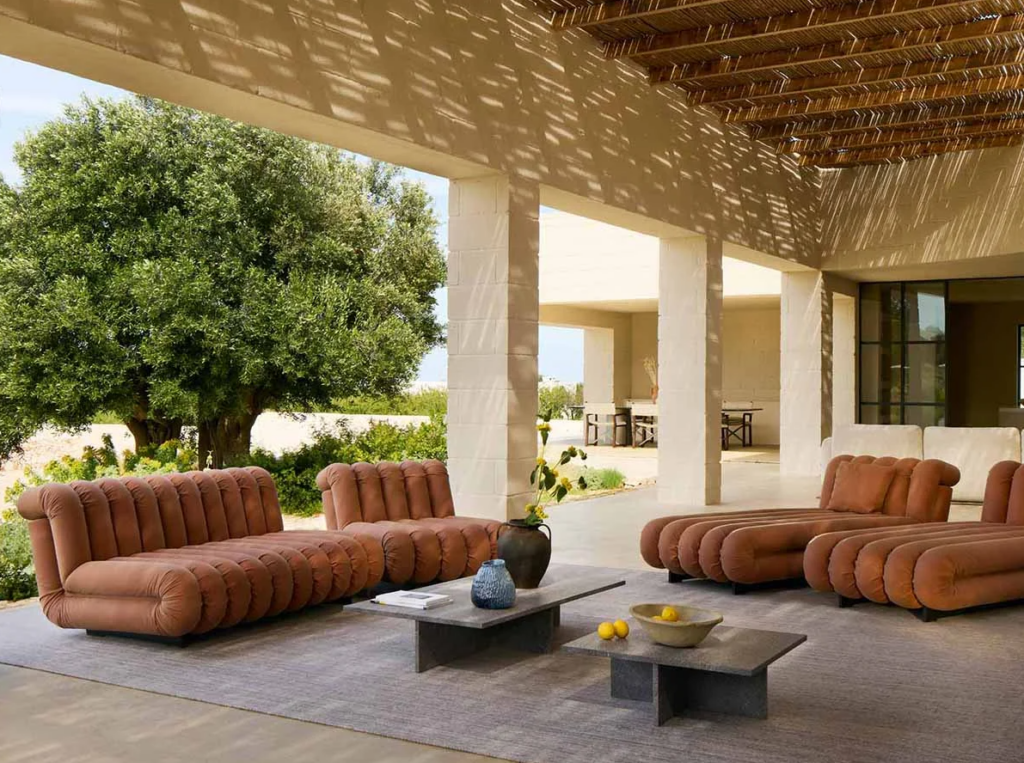
For this reason, Revival develops bespoke upholstery and textile solutions adapted to each environment. Whether designing upholstered wall panels for a yacht cabin, seating for a hotel lounge or custom elements for a private residence, material choice and construction details are adjusted to achieve the right balance between comfort, privacy and functionality.