
16 Feb Interior–Exterior Continuity: Creating Cohesive Living Spaces Across Yachts, Homes and Hotels
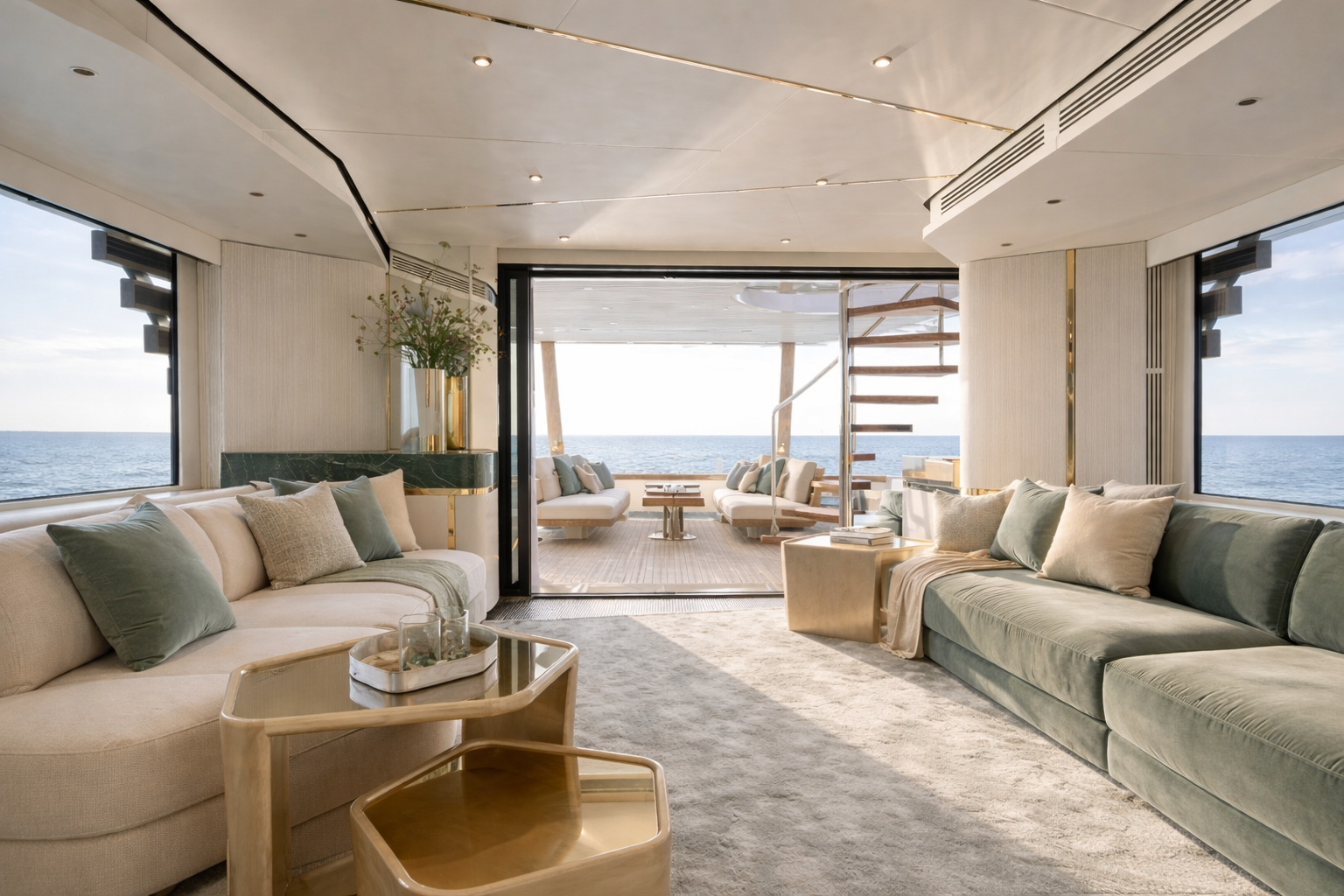
The boundaries between interior and exterior spaces have become increasingly fluid. In yachts, private residences and hospitality environments, comfort is no longer confined to enclosed areas — outdoor spaces are now an integral part of daily living.
Interior–exterior continuity focuses on creating a seamless transition between these environments, allowing spaces to function as a unified whole rather than as separate zones. When executed correctly, this approach enhances comfort, improves spatial flow and strengthens the overall identity of a project.
Why continuity matters in modern living environments
In yachts, the relationship between interior and exterior is constant. Decks, salons and outdoor lounges are used interchangeably throughout the day, often within limited dimensions. Abrupt changes in materials, finishes or comfort levels can disrupt the onboard experience.
In residential and hospitality projects, continuity supports more natural movement between spaces such as living rooms, terraces, pool areas or lounges. A consistent visual and tactile language helps users perceive the space as larger, calmer and more coherent.
Across all environments, continuity reduces sensory contrast, creating spaces that feel balanced and intentionally designed.
Materials as the connecting element
Material selection is one of the most effective tools for achieving interior–exterior continuity. By using coordinated textiles, upholstery and surface finishes, designers can maintain visual harmony while adapting materials to different performance requirements.
Outdoor fabrics often require enhanced UV resistance, water repellency and durability, while interior textiles prioritise comfort and acoustic performance. Through careful selection of colour palettes, textures and weave patterns, it is possible to maintain a unified aesthetic without compromising functionality.
Upholstered elements such as seating, cushions, wall panels and soft furnishings help bridge the transition between spaces, reinforcing continuity through both appearance and comfort.
Comfort, performance and durability across environments
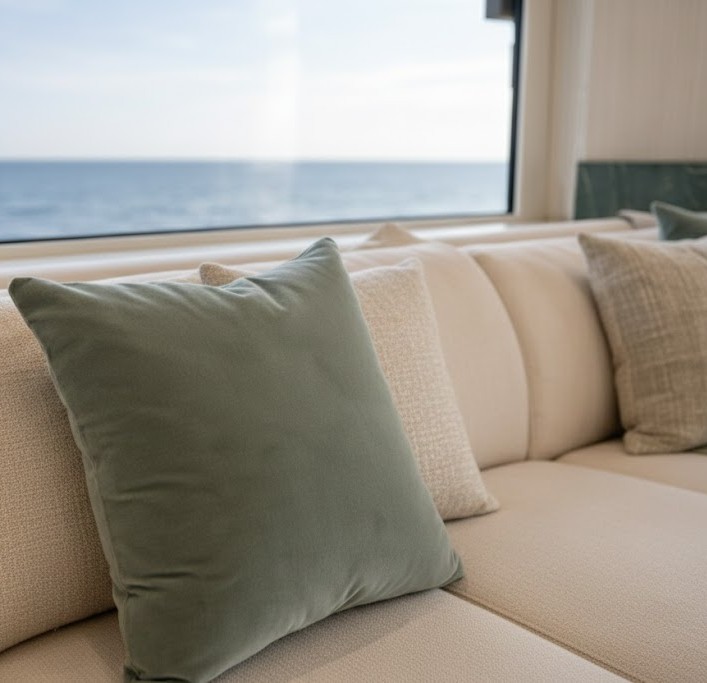
Maintaining continuity does not mean using identical materials everywhere. Instead, it requires selecting materials that behave consistently while responding to their specific environment.
On yachts, materials must withstand movement, humidity and sun exposure while remaining comfortable and stable. In homes and hotels, high-traffic areas and outdoor zones require finishes that are easy to maintain and resistant to wear.
At Revival, material systems are developed with these differences in mind. Interior and exterior elements are designed to complement each other in appearance and feel, while meeting the technical demands of their respective environments.
Design coordination from concept to execution
Achieving seamless continuity requires coordination from the early design stages. Layouts, furniture proportions, upholstery details and shading solutions must be considered together to avoid visual or functional breaks.
Through integrated design, fabrication and installation processes, Revival ensures that interior and exterior elements align in terms of proportions, materials and detailing. This allows spaces to transition naturally and supports a consistent user experience across all areas.
A unified experience through thoughtful design
Interior–exterior continuity is not simply an aesthetic choice. It is a design strategy that enhances comfort, usability and longevity across yachts, homes and hotels.
By carefully coordinating materials, upholstery and construction details, Revival creates living environments that feel cohesive, adaptable and comfortable — regardless of where the boundary between inside and outside lies.