

22 Sep End-of-Season Yacht Upholstery: What to Check Before Planning a Refit
After months of regular use, yacht interiors and exterior seating can begin to reveal where attention is needed. For anyone considering yacht refit upholstery in Mallorca, the end of the Mediterranean season is a useful moment to assess the condition of fabrics, cushions and upholstered elements before planning the next stage of work.
Not every sign of wear requires replacement. However, identifying issues early makes it easier to decide what can be repaired, recovered or incorporated into a wider refit.
Start With the Areas That Have Worked Hardest
Some parts of a yacht naturally experience more use than others.
Frequently used seating, exterior lounges, dining areas and circulation spaces may show changes sooner than less-used areas. These can include fabric wear, slight loss of shape or differences in cushioning.
A post-season inspection gives owners, crew and refit teams a clearer picture of how the upholstery has performed under real conditions.
Rather than looking only at appearance, it is worth considering comfort, support and how each element is behaving after months of use.0
Check Fabrics, Seams and Finishes
Fabric condition is often the most visible starting point.
Fading, marks, abrasion or areas where the material has stretched can indicate where work may eventually be required. On exterior upholstery, exposure to sunlight, humidity and the marine environment can make these changes more noticeable.
Seams and stitching also deserve attention. Small areas of loose stitching may seem minor, but addressing them early can prevent further deterioration.
The same applies to piping, edges, fastenings and other finishing details. In bespoke yacht upholstery, these details are essential both to appearance and long-term performance.
Look Beyond the Surface
The fabric is only one part of an upholstered piece.
Foam and internal construction determine how seating feels and how well it retains its shape. Over time, cushions may become softer, compressed or uneven, particularly in areas that receive constant use.
This does not always mean that the complete piece needs replacing. In many yacht refit upholstery projects, improving internal components or recovering an existing structure can restore comfort while preserving elements that remain in good condition.
This is why a proper assessment should consider what is happening beneath the surface as well as what can immediately be seen.
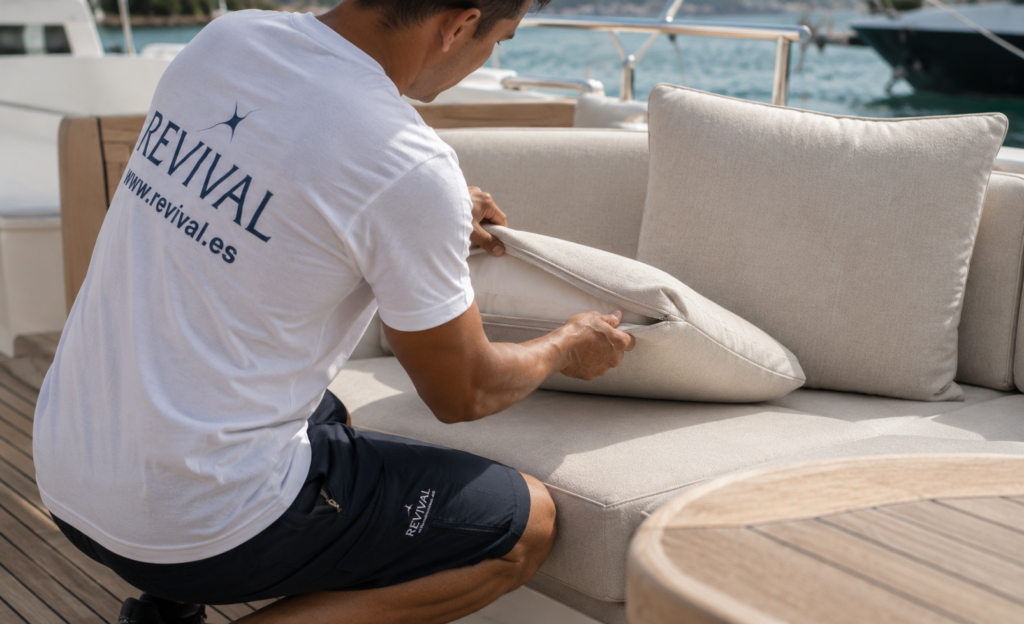
Turn the Assessment Into a Refit Plan
Once the condition of the upholstery has been reviewed, it becomes easier to establish priorities.
Some elements may only require small repairs. Others may benefit from new fabrics, updated cushioning or a completely made-to-measure solution.
Planning these decisions early also gives more time for material selection, measurements and coordination with other yacht refit work.
For projects involving yacht upholstery in Mallorca, this can be particularly valuable during the quieter period after the main summer season. It allows the work to be planned carefully rather than becoming an urgent requirement shortly before the yacht returns to active use.
Plan for the Next Season, Not Just the Current Wear
A good refit is not simply about correcting visible damage.
It is also an opportunity to consider how upholstery could perform better in the future. A different fabric, improved foam specification or small adjustment to construction may increase durability, comfort or ease of maintenance.
The end of the season therefore provides a useful point to review what has worked, identify what has not and make informed decisions for the next stage of the yacht.
At Revival, our team in Mallorca works across bespoke yacht upholstery and refit projects, from individual repairs and recovering to complete made-to-measure solutions. Assessing each element carefully helps determine the most appropriate intervention before work begins.