

29 Jul Caring for Marine Textiles: Small Habits That Make a Big Difference
Caring for marine textiles begins with understanding the demanding environments they are designed to withstand.
They are exposed to intense sunlight, salt, humidity, temperature changes and continuous use, conditions that place far greater demands on fabrics than those found in most interior spaces.
Choosing high-quality materials is an important first step, but long-term performance depends just as much on how those materials are cared for. Often, it is the small maintenance habits that have the greatest impact on their appearance and lifespan.
Salt Is More Than a Surface Residue
After a day at sea, salt often remains on upholstery, cushions and protective covers even when it is barely visible.
As moisture evaporates, salt crystals stay trapped within the fabric. Over time, these tiny particles can become abrasive, increasing wear as people sit, move or fold the material.
A gentle rinse with fresh water, whenever the fabric and manufacturer’s care instructions allow, helps remove these deposits before they accumulate.
It is a simple habit that can significantly reduce long-term wear.
Sunlight Doesn’t Damage Fabrics Overnight
One of the most common misconceptions is that UV exposure only becomes a problem after years of use.
In reality, prolonged sunlight gradually affects fibres, colours and finishes. The process is slow, making it easy to overlook until fading or changes in texture become noticeable.
Whenever possible, storing loose cushions, closing protective covers or reducing unnecessary exposure during long periods of inactivity can help preserve both colour and performance.
Protection is often more effective than restoration.
Ventilation Matters More Than Many People Realise
Humidity is part of life on board.
Without adequate airflow, moisture can remain trapped inside cushions, upholstery or stored covers, creating the ideal conditions for unpleasant odours and microbial growth.
Even on dry days, allowing fabrics to breathe before covering or storing them can make a noticeable difference.
Good ventilation is one of the simplest, and most overlooked, forms of textile care.
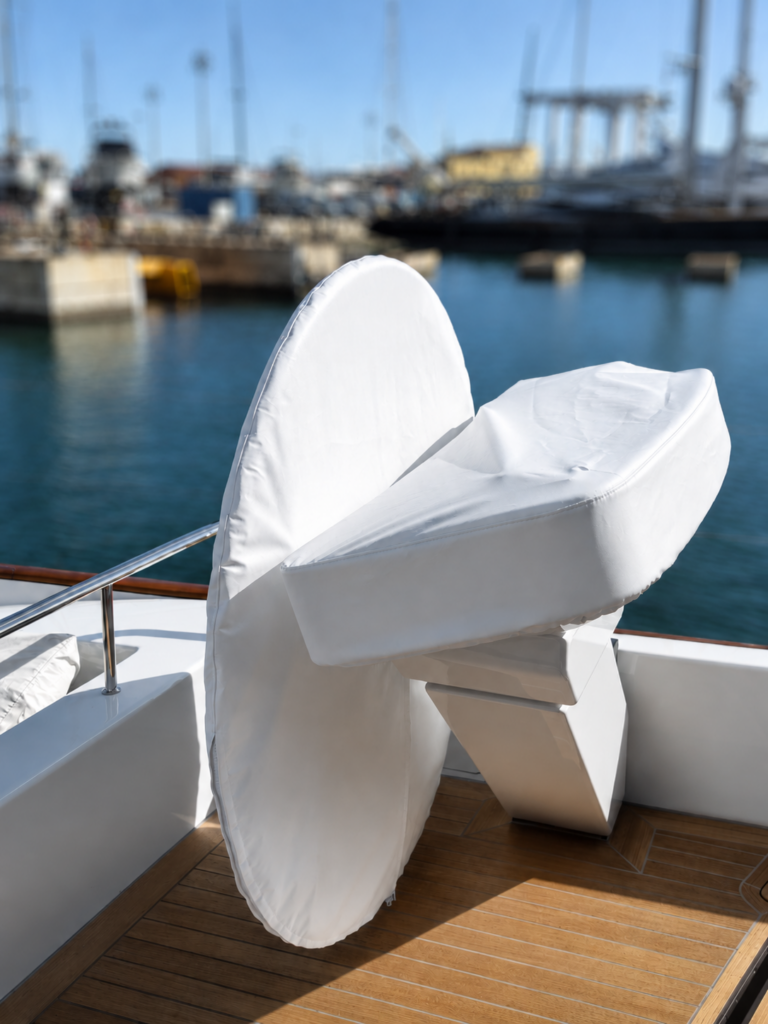
Storage Is Part of Marine Textile Care
When protective covers or removable cushions are not in use, the way they are stored also matters.
Folding the same fabric repeatedly along identical lines can create permanent creases over time, while storing textiles before they are completely dry may encourage unwanted moisture to remain trapped.
Whenever possible, store fabrics clean, dry and in a well-ventilated space. Small precautions taken during storage often prevent larger problems later.
Caring for Marine Textiles Extends Performance
Marine textiles are selected because they are built to perform.
Their longevity, however, is not determined by the material alone. Regular cleaning, sensible storage, protection from unnecessary exposure and simple maintenance routines all contribute to preserving their appearance and functionality over the years.
Caring for marine textiles is rarely about major interventions.
It is about consistent habits that allow quality materials to perform exactly as they were designed to do.