
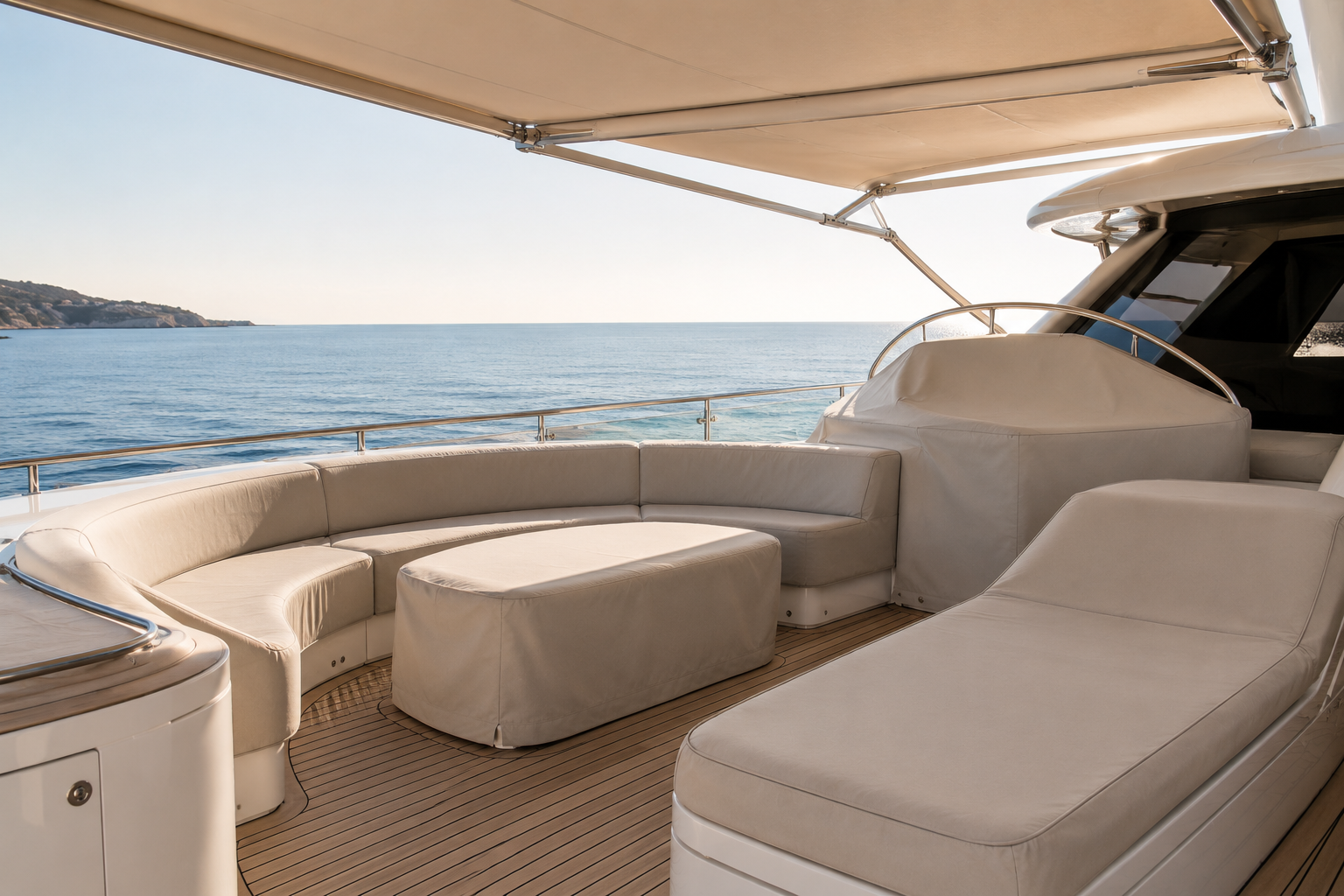
25 Aug How Custom Covers and Awnings Protect a Yacht Beyond the Surface
On board, protection is not only about covering a surface. Custom covers and awnings help preserve materials, improve comfort and reduce the effects of continuous exposure to sunlight, heat and the marine environment.
When designed correctly, they become an integrated part of the yacht rather than an element added afterwards.
Protection from Sun and Marine Exposure
Exterior areas are constantly exposed to UV radiation, humidity, salt and changing weather conditions. Over time, this can cause fabrics to fade, surfaces to deteriorate and upholstery to lose its original appearance.
Custom yacht covers create a protective barrier for seating, consoles, tables and other exposed elements. By limiting direct exposure, they help reduce premature ageing and extend the useful life of the materials underneath.
Reducing Heat Inside the Yacht
Covers and awnings can also help control temperature.
Windscreen covers reduce the amount of sunlight entering through the glass, helping prevent the bridge and surrounding interior areas from overheating. Awnings create shade across exterior spaces, making decks and seating areas more comfortable during the warmest parts of the day.
This protection can support a more pleasant onboard environment while reducing the prolonged heat exposure experienced by interior fabrics and finishes.
Why a Custom Fit Matters
A cover must remain secure while adapting precisely to the shape of the yacht.
Loose or poorly fitted covers can move in the wind, collect water or create friction against the surfaces they are intended to protect. A made-to-measure solution takes into account curves, fixing points, equipment and the way each area is accessed and used.
Accurate measuring and templating are therefore essential. The finished piece should be easy to install and remove, while maintaining a clean and considered appearance.
Selecting the Right Materials
The material must be chosen according to the location and purpose of the cover or awning.
Important factors include:
- UV and water resistance;
- breathability;
- strength and dimensional stability;
- resistance to mould and mildew;
- ease of handling and maintenance;
- colour and integration with the yacht’s design.
Breathability is particularly important. Although protection from water is essential, trapped moisture can lead to condensation and affect the materials underneath.
Designed for Everyday Use
The most effective protective solutions respond to how life on board actually works.
Frequently used areas may require covers that can be removed quickly. Larger awnings need secure fixing systems and practical storage solutions. Other pieces may need access openings or separate sections so that equipment can be used without uncovering the entire area.
These details make the difference between a cover that simply fits and one that performs reliably in everyday conditions.
Long-Term Protection, Made to Measure
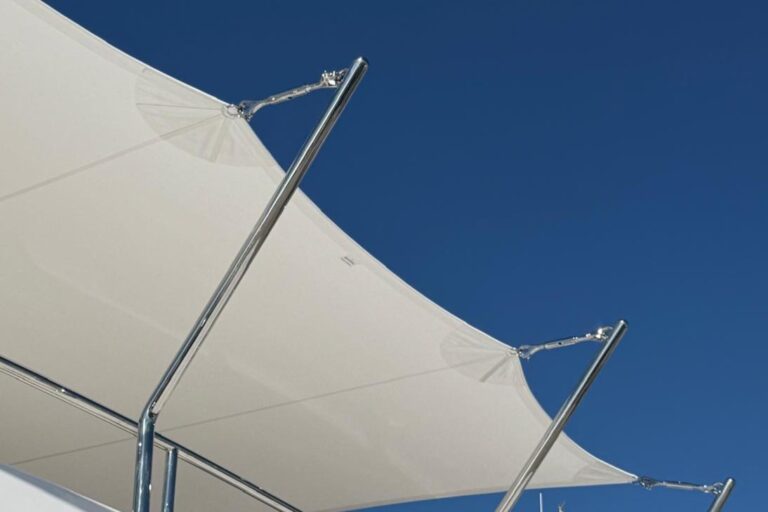
Custom covers and awnings protect more than the visible surface. They help preserve upholstery and finishes, control heat and make exterior spaces more comfortable.
By combining technical materials, precise fitting and thoughtful design, they become part of a wider approach to the long-term care of the yacht.