
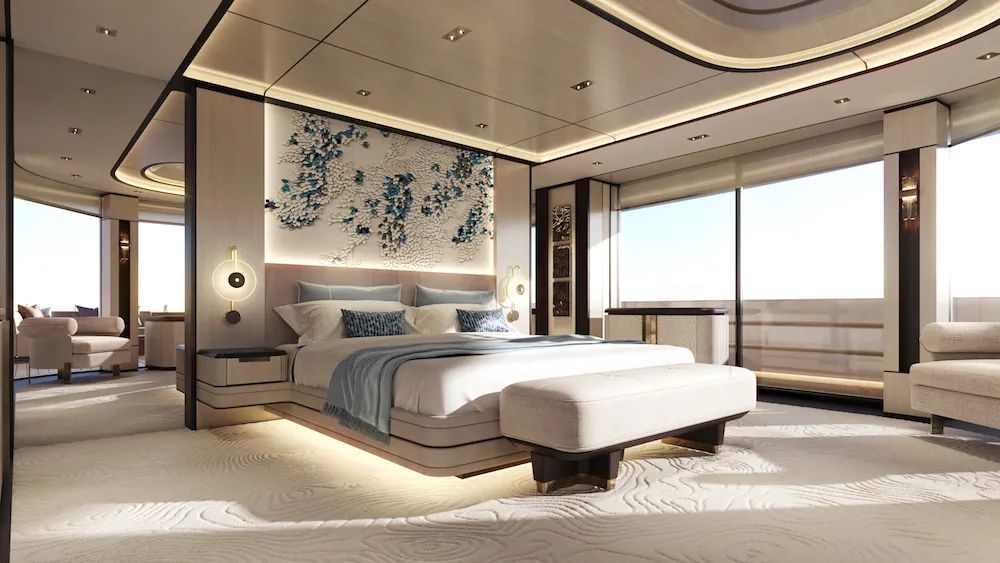
23 Apr What Working on Yachts Has Taught Us About Interior Design
Working on yacht interiors introduces a set of challenges that are rarely present in conventional interior projects. Limited space, strict tolerances, environmental exposure and complex structural conditions all require a highly precise approach to materials and installation.
Over time, these constraints shape the way projects are approached. Many of the lessons learned in yacht interiors ultimately translate into better practices for residential, hospitality and commercial spaces.
Although the environments differ, the discipline required in marine projects often raises the standard for interior work as a whole.
Precision Becomes Essential
Yachts demand a level of precision that leaves little margin for adjustment once fabrication begins. Surfaces are often curved, structures are integrated and available space is carefully optimised.
As a result, measurements, patterns and fabrication must be extremely accurate from the outset. Even small deviations can affect how elements align within the space.
This emphasis on precision influences how work is approached in other interiors as well. Careful measurement, detailed preparation and controlled fabrication tend to produce cleaner results in any environment, whether on land or at sea.
Materials Must Perform in Difficult Conditions
Unlike most residential interiors, yacht environments expose materials to humidity, salt, temperature fluctuations and constant movement. These conditions require careful selection of fabrics, foams, carpets and structural components.
Durability therefore becomes a key consideration during the design phase. Materials must maintain their appearance and performance despite environmental stress and regular use.
This mindset often carries over into other projects. Selecting materials based not only on appearance but also on long term behaviour helps ensure that interiors remain functional and consistent over time.
Space Teaches Efficiency
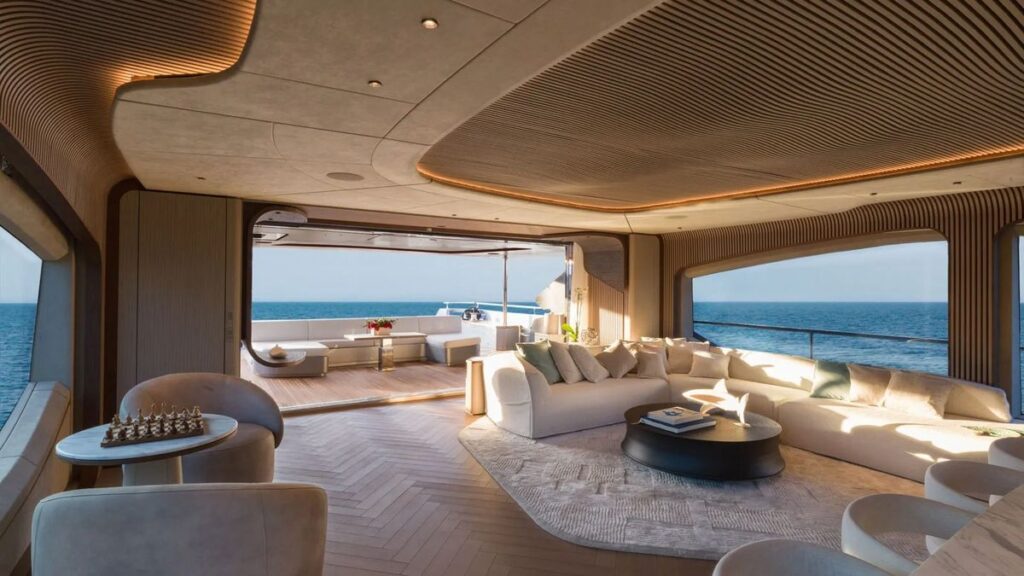
Space limitations in yachts encourage a highly efficient use of every available surface. Seating, storage, textiles and architectural elements often need to coexist within compact layouts.
This constraint encourages thoughtful planning and integration between disciplines. Upholstery, flooring, joinery and structural components must align precisely within the available volume.
Even in larger residential or hospitality spaces, this approach to spatial efficiency can improve how interiors function. When each element is considered as part of a larger system, the overall environment tends to feel more coherent and balanced.
Coordination Between Trades
Yacht projects typically involve multiple specialised trades working within confined areas. Shipyards, interior designers, engineers and fabrication workshops must coordinate closely to ensure that each stage of the project proceeds smoothly.
This collaborative process reinforces the importance of communication and early planning. When technical decisions are addressed early, many installation challenges can be avoided later in the project.
The same principle applies to any complex interior project. Coordination between disciplines often determines whether the final installation proceeds efficiently.