

14 Apr What Makes a Project Run Smoothly: Upholstery Decisions That Avoid Last-Minute Issues
In complex interior projects, upholstery is often perceived as one of the final stages of production. However, many of the factors that determine whether an upholstery installation runs smoothly are defined much earlier in the project.
When upholstery considerations are integrated into the planning phase, many common issues such as delays, last-minute adjustments or unexpected modifications can be avoided. Early coordination between designers, shipyards, contractors and the upholstery workshop allows technical decisions to be resolved before production begins.
Careful project planning ensures that upholstery elements integrate correctly within the wider construction process.
Early Coordination with Designers and Project Teams
One of the most effective ways to prevent last-minute issues is through early communication between the upholstery workshop and the wider project team.
Designers may define the aesthetic concept of seating, wall panels or custom pieces, but the technical feasibility of these elements depends on factors such as internal structure, fixing systems and material behaviour.
By reviewing these aspects early in the project, potential adjustments can be identified before manufacturing begins. This coordination helps ensure that dimensions, tolerances and installation methods align with the overall project schedule.
Accurate Measurement and Pattern Development
Precise measurement is another essential element in successful upholstery project planning.
In yacht interiors and custom residential projects, surfaces are rarely perfectly uniform. Curved structures, integrated furniture and built-in components often require highly accurate pattern development.
Taking detailed measurements at the correct stage of the project ensures that upholstery elements can be fabricated with the correct tolerances. This reduces the risk of on-site modifications and allows installations to proceed efficiently once production is complete.
Material Selection and Lead Times
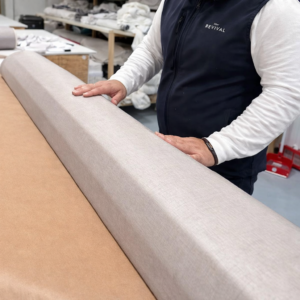
Material selection also plays an important role in maintaining project timelines.
Fabrics, foams and technical materials often have different production and delivery schedules. If these factors are not considered early in the planning process, projects may encounter delays when materials are not available at the required stage.
Confirming material specifications and availability early allows production to be scheduled with greater certainty, reducing the risk of last-minute substitutions or compromises.
Considering Installation from the Start
Another frequent source of delays arises when installation requirements are not considered during the design phase.
Access points, fixing systems and structural supports all influence how upholstery elements are installed. If these aspects are not defined in advance, installation teams may need to make adjustments on site, which can affect both timing and finish quality.
Planning installation methods early allows upholstery components to be fabricated with the correct mounting systems and structural support.
A Process Built on Preparation
Smooth project execution is rarely the result of improvisation. Instead, it comes from preparation, communication and careful technical planning.
When upholstery decisions are integrated early in the project — from measurement and material selection to installation strategy — the entire process becomes more predictable and efficient.
For complex yacht and interior projects, this approach helps ensure that the final installation proceeds without unnecessary delays or last-minute changes, allowing the finished result to meet both technical and aesthetic expectations.