
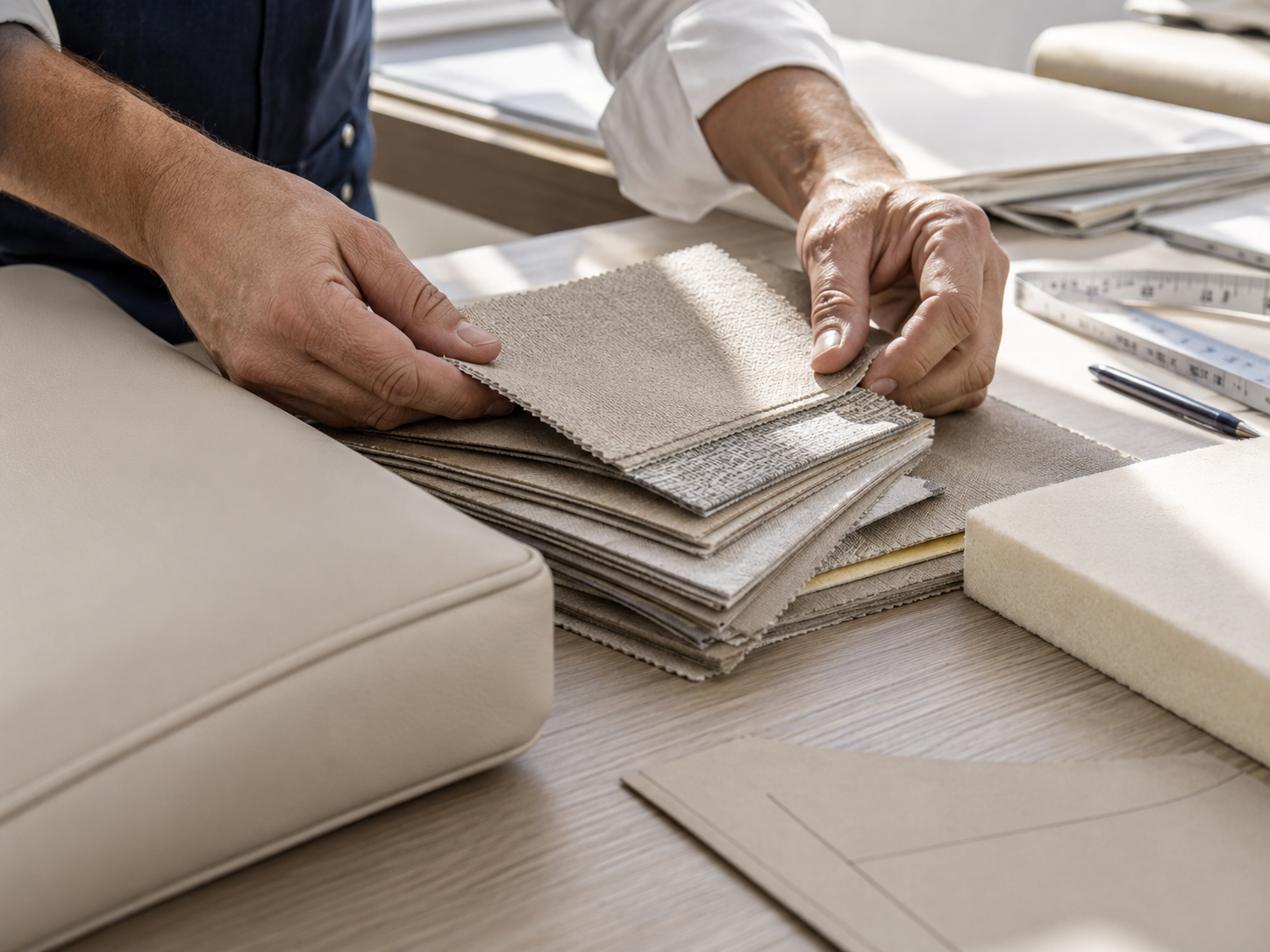
13 Aug When Should Yacht Upholstery Be Repaired, Recovered or Replaced?
Yacht upholstery is constantly exposed to sunlight, humidity, salt and regular use. For yacht refit upholstery in Mallorca, deciding whether an existing piece should be repaired, recovered or replaced is an important part of the process.
Over time, fabrics fade, seams weaken and foam loses its original shape. However, visible wear does not always mean that a piece needs to be replaced completely.
The right decision depends on the condition of the fabric, foam and internal structure.
When a Repair Is Enough
A targeted repair may be sufficient when the damage is limited to one area, and the rest of the upholstery remains in good condition.
This can include:
- reinforcing a seam;
- replacing a zip or fastening;
- repairing a small tear;
- correcting a loose section of fabric.
Repairs are especially useful when a piece belongs to a larger matching set and replacing it would create an obvious visual difference.
However, colour and texture can change after years of exposure to sunlight, so even the same fabric reference may not match the original perfectly.
When Upholstery Should Be Recovered
Recovering involves replacing the exterior fabric while keeping the main structure of the piece.
It is often the best option when the upholstery is faded, stained or outdated, but the foam and internal support are still in good condition.
Recovering can refresh the appearance of a yacht interior without rebuilding every element. It also creates an opportunity to select a material with better resistance to sunlight, moisture or frequent use.
The new fabric can be coordinated with carpets, curtains, wall panels and other elements introduced during a yacht refit.
When Foam Needs Attention
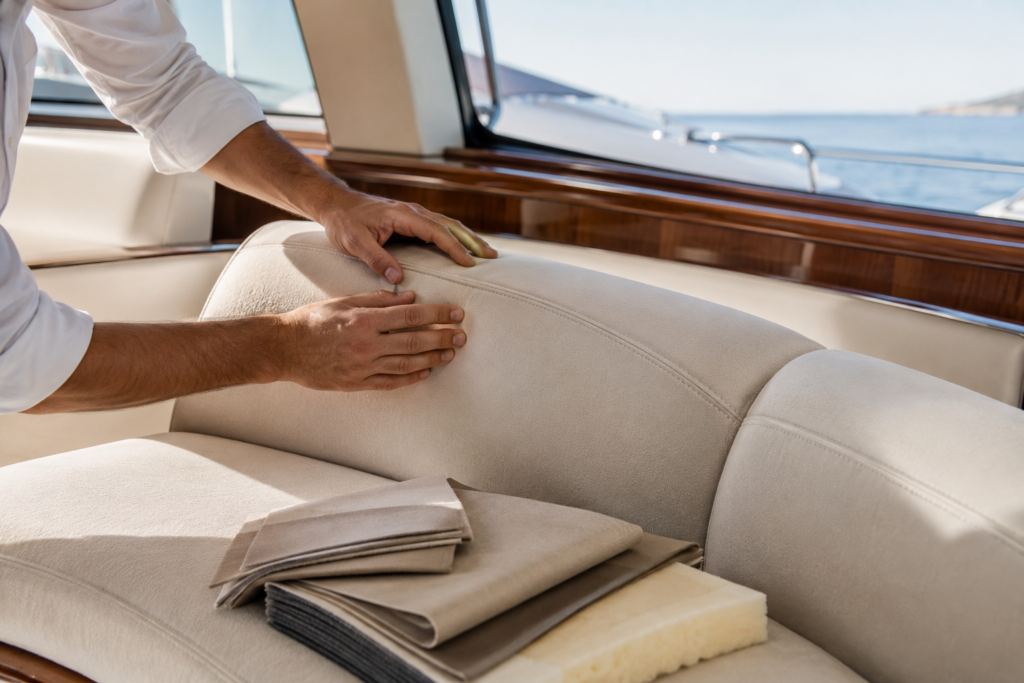
The condition of the foam is just as important as the exterior fabric.
Over time, foam can lose density and stop returning to its original shape. This can make seating feel too soft, uneven or uncomfortable.
Replacing only the fabric will not solve the problem if the foam underneath has deteriorated.
Foam may need to be replaced when:
- cushions remain compressed;
- seating feels less supportive;
- the surface appears uneven;
- moisture or odours are present;
- the original shape has been lost.
Choosing the correct density and construction helps restore both comfort and definition.
When Full Replacement Is the Better Option
Full replacement is usually recommended when the internal structure is damaged, the piece no longer fits the space or repeated repairs would only offer a temporary solution.
It may also be the best choice when the use of the area has changed. For example, seating may need to accommodate more guests, provide additional support or integrate storage.
In these cases, a new bespoke piece allows the dimensions, materials and ergonomics to be reconsidered as part of the wider refit.
Choosing Materials for Yacht Refit Upholstery in Mallorca
Whether the upholstery is repaired, recovered or replaced, the materials must be suitable for the marine environment.
The selection should consider:
- sunlight and UV exposure;
- humidity and moisture;
- abrasion and regular use;
- maintenance requirements;
- fire-performance standards where required.
Performance is essential, but it should not come at the expense of appearance. The objective is to create upholstery that feels coherent with the interior while performing reliably on board.
The Right Solution for Each Piece
There is no single answer for ageing yacht upholstery.
Some pieces only require a precise repair. Others can be renewed through new fabric and foam, while certain elements need to be replaced entirely.
A professional assessment helps determine what can be preserved, what should be updated and what no longer performs as required.
Choosing the right level of intervention can extend the lifespan of the upholstery, improve comfort and support a more efficient yacht refit.
For yacht refit upholstery in Mallorca, assessing each piece individually helps determine what can be preserved, what should be renewed and what needs to be replaced.